
Our History
Since 1901, The Association of Junior Leagues International (AJLI) has been a women’s organization whose Mission is to advance women’s leadership for meaningful community impact through volunteer action, collaboration, and training. We are dedicated to empowering women to become effective leaders and agents of positive change. Together, we work to create equitable and thriving communities, believing in the power of women’s leadership as a catalyst for meaningful impact.
-
1900s:
New Century, New Need, New Women
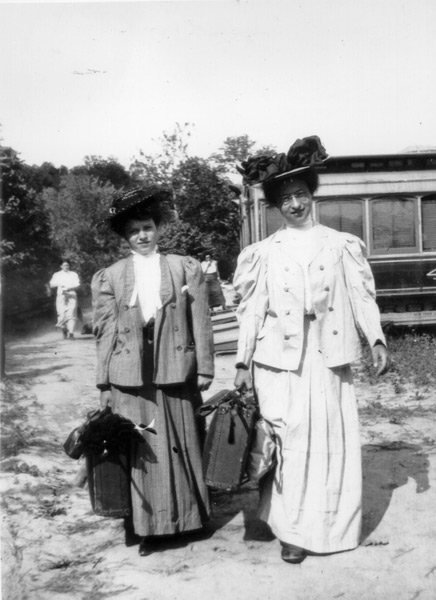
Junior League 1900s: New Century, New Need, New Women
Girls coming of age as the 20th century began were already on their way to becoming modern women. Since 1860, when a brewer named Vassar established a college to offer women the same rigorous academic training received by men, more and more middle class women were attending new women’s colleges or progressive co-educational institutions in the west. After Frederic A.P. Barnard, president of Columbia University, failed to win admission of young women, a women’s college named after him opened across Broadway in 1889, joining what would be called The Seven Sisters, private education institutions that took women seriously and challenged them intellectually. It was at Barnard just after the turn of the century that Mary Harriman decided to form a “junior league” of affluent young women, volunteering their energies to help cure the social ills of their city. The Junior League Movement built upon and expanded a new awareness that women could make a difference in society beyond hearth and home.
“Our League, as I see it, was organized as a means of expressing the feeling of social responsibility for the conditions which surrounded us. We have the responsibility to act, and we have the opportunity to conscientiously act to affect the environment around us.”
-Mary Harriman, 1912 -
March 15, 1901
Mary Harriman founds The Junior League
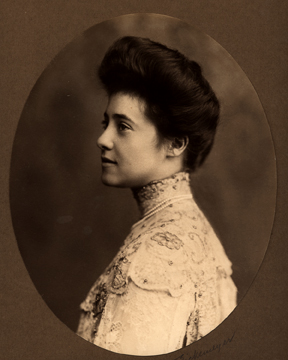
March 15, 1901: Mary Harriman founds The Junior League
The Progressive Era (1890s-1920s) was marked by rapid industrialization, a large influx of immigrants, and the growth of inner city tenements. There was also a lot of corruption in business and politics as well as poor working and living conditions for many working class people. The Progressive Era was also marked by reform in education, sanitation, public health, government, and the environment.
Women who participated in reform efforts were often times married middle-class white women who did not work outside of the home. This class of “New Women” turned to reform as an intellectual and creative outlet.
Learn more about the role of women in reform by visiting the online exhibit at the National Women’s History Museum, Reforming their World: Women in the Progressive Era.
-
1903
Eleanor Roosevelt becomes one of the first members of The Junior League
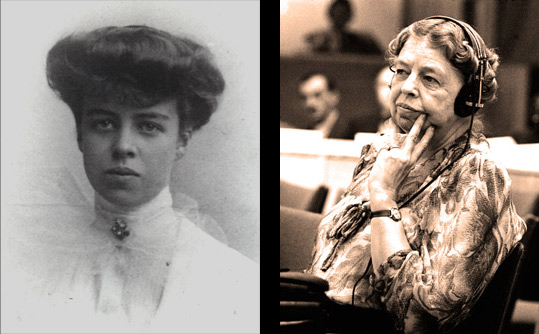
Eleanor Roosevelt
Joining her friend, Mary Harriman, the future First Lady took her first step in public service as a member of the Junior League of the City of New York. She pressed the causes of black people, youth, the poor, and the unemployed.